


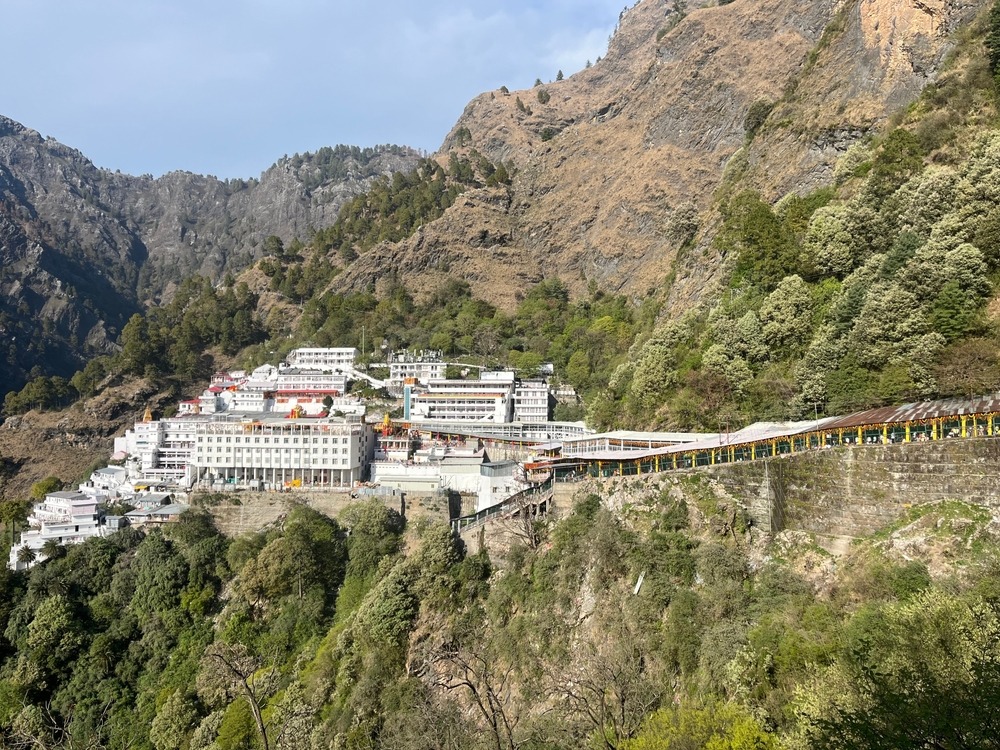
vaishno devi yatra: essential travel & accommodation guide
- HotelWhy Millions Make This Journey Every Year
Every year, over eight million people make the trek to Vaishno Devi temple in Jammu. That number puts it among the most visited religious sites in the world, ahead of many destinations that get considerably more international press.
The reason isn't just devotion, though devotion is the primary force. It's that the journey itself, the mountain trek through the Trikuta hills, the cold air, the physical effort of climbing toward something, produces a quality of arrival that a temple accessible by car doesn't. You earn the darshan. And that earning changes what the experience means when you get there.
For anyone planning the trip for the first time, understanding what the journey actually involves makes the difference between a pilgrimage that goes smoothly and one that doesn't.
The Trek: What the Route Actually Involves
The Vaishno Devi temple in Jammu sits at 5,200 feet in the Trikuta Mountains. Katra, the base town, sits at around 2,500 feet. The trek between them, the traditional Darshani Deorhi to the Bhawan route, covers roughly 13 kilometres one way.
Two routes are available. The traditional route via Banganga and Adhkuwari, longer, more gradual, the path that generations of pilgrims have used. The newer Ban Ganga route via Himkoti, shorter but steeper in sections. Both are well-marked and well-maintained, with rest stops, medical facilities, and refreshment stalls throughout.
The Ropeway, operational between Tarakote Marg and Sanji Chhat, cuts the trek time for those who want it, particularly useful for older pilgrims and families with younger children. Pony and pittu (porter service) are available from the base if the full trek on foot isn't practical.
One practical note: yatra slips are mandatory and issued free of charge at the Katra base camp on presentation of a valid ID. The registration manages pilgrim flow and is required before departure, don't skip this step.
The Best Time to Visit Vaishno Devi Temple in Jammu
The shrine is open year-round. The experience varies significantly by season.
March to June: The most popular window. Weather is pleasant, the trail is clear, and the crowds are at their annual peak particularly around Navratri in April. Book accommodation well in advance.
July to September: Monsoon season. The trail becomes slippery and some sections can be difficult. The crowd thins compared to peak season. Experienced trekkers manage the route without issue; first-timers should check conditions before departure.
October to November: The second Navratri festival in October draws massive pilgrimage numbers. The post-festival window in November is quieter with the clearest views of the season.
December to February: Cold, sometimes snow above Sanji Chhat. The shrine remains open. The experience of the Vaishno Devi temple in Jammu in snow carries its own character that the summer visit doesn't replicate.
What Katra Is and Why It Matters
Katra is a small town that exists almost entirely in relationship to the shrine above it. The market, the accommodation, the restaurants, the transport infrastructure, all of it is oriented toward pilgrims arriving and departing.
That singular focus has its advantages. The town is experienced in handling large volumes of people efficiently. Accommodation options range from budget guesthouses to 4-star hotels. The trail registration and base camp facilities are well-organised. Getting from the railway station or bus stand to the trek start point is a short and well-understood journey.
The disadvantage is that Katra isn't a destination in itself. The quality of the stay matters less as a standalone experience and more as the context from which the pilgrimage departs and returns. A hotel that handles an early morning departure and a late evening return, with food available at both ends and a room that lets you rest properly in between, is the right brief.
The Spiritual and Cultural Dimension Beyond the Shrine
The Vaishno Devi temple in Jammu is one of the Shakti peethas, shrines of the divine feminine that are distributed across the Indian subcontinent. The specific mythology associates Vaishno Devi with the goddess Vaishnavi, who according to tradition took shelter in the cave that became the shrine after a confrontation with the demon Bhairon.
The Bhairon Nath Temple sits 2.5 kilometres beyond the main Bhawan, on a separate ridge. Most pilgrims visit this after the main darshan, completing the yatra circuit rather than turning back from the Bhawan directly. The views from the Bhairon Nath Temple across the Trikuta range are the specific reward for the additional kilometre.
Ardhkuwari, the cave shrine roughly halfway between Katra and the Bhawan, marks the point where Vaishno Devi is said to have meditated for nine months. It sits at 7,200 feet, and the cave's interior requires crawling through a narrow passage to enter. Not everyone does it. Those who do describe the experience as the most specifically unusual moment of the trek.
Practical Things Nobody Tells You Before the Trek
- Start at 4 am or 5 am if possible: The early morning window gives you the cooler temperatures, the less crowded trail, and the light that comes over the Trikuta hills before the valley fills with haze. The return journey in the afternoon is harder on both the body and the mood.
- Footwear matters more than most people factor in: Proper trekking shoes or sports shoes with grip. Not sandals, regardless of what you see others wearing on the lower sections.
- Carry water and light snacks: The stalls on the trail handle most needs, but the queues at popular rest stops during peak periods can be long.
- The darshan queue at the Bhawan can run several hours during peak season: The Helicopter service from Katra to Sanji Chhat reduces the trail time but doesn't affect the Bhawan queue. Factor this into the day's timing rather than assuming the queue will move quickly.
- Return transport needs to be arranged before the trek: Taxis and shared vehicles fill up at the end of the day. Hotel concierge or the Katra tourism desk can arrange this in advance.
Ramada Katra
4-star. 62 styled rooms. 2 kilometres from the Banganga Check Post, the standard departure point for the Vaishno Devi temple in Jammu trek. Pool, spa, fitness centre, multi-cuisine restaurant on the property.
The hotel handles the specific needs of a pilgrimage stay: early morning departures, late returns, the requirement for a proper meal before a 13-kilometre climb and after it. The kitchen runs Indian and international options, the spa handles recovery after the trek, and the fitness centre works for the day of acclimatisation before departure